
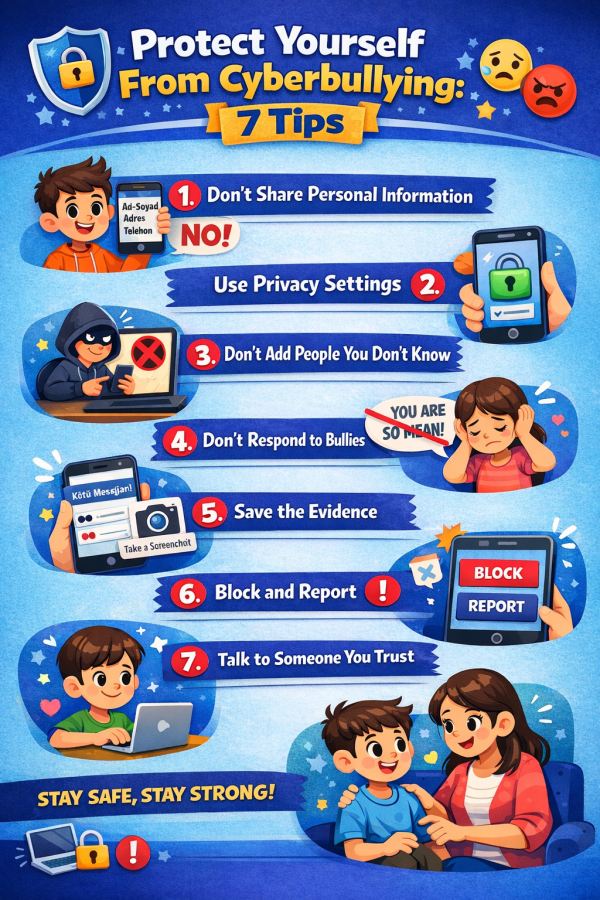
1. 🔒 Make It a Habit Not to Share Personal Information
Anything you share online can be permanent and may be used by people with bad intentions. Avoid sharing personal details such as your name, address, school, or phone number. Remember: If you wouldn’t share it with a stranger in real life, don’t share it online either.
2. 🙈 Actively Use Privacy Settings on Social Media
Social media platforms offer various tools to help protect your safety. Making your account private, sharing posts only with people you know, and limiting who can message you can significantly reduce the risk of cyberbullying.
3. 🚫 Avoid Communicating with People You Don’t Know
On the internet, anyone can pretend to be someone else. For your safety, do not accept friend requests from strangers and avoid communicating with people you do not know in real life.
4. 💬 Stay Silent Instead of Responding to Bullying Messages
Cyberbullies often want a reaction. Responding may make the situation worse. The best approach is not to reply and instead block the person directly.
5. 📸 Keep Evidence of Negative Experiences
If you receive disturbing messages or content, take screenshots before deleting them. These records can help when you report the situation to a trusted adult or file an official complaint.
6. 🚨 Use Blocking and Reporting Features Effectively
Most platforms offer “block” and “report” options. Use these features to prevent further contact and allow the platform to take appropriate action.
7. 👨👩👧 Share Your Experience with a Trusted Adult
If you experience cyberbullying, you don’t have to handle it alone. Talk to your parents, teachers, or another trusted adult. Sharing the situation can help you feel supported and find the right solution.