
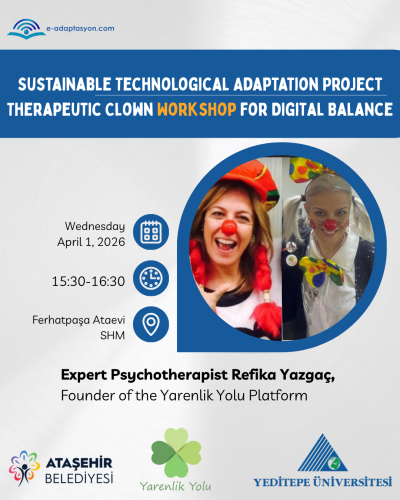
Most of us know clowns as figures with red noses and funny costumes who entertain children at birthday parties. However, when we talk about therapeutic clowns, we see that they also have a healing and supportive role. When guided by experts such as Psychotherapist Refika Yazgaç (Founder of the Yarenlik Yolu Platform), this practice becomes a powerful emotional therapy tool.
Today, children spend less time playing outside in parks and more time with digital devices. Tablets, phones, and endless video streams place a heavy burden on their mental and emotional world. We cannot remove technology from their lives—that is a fact. But the important question is: how can we create a balance?
SETAP and the Therapeutic Clown Workshop
This is where SETAP (Sustainable Technological Adaptation Project), carried out in cooperation with Yeditepe University’s E-Commerce Department and Ataşehir Municipality, offers a creative solution: the Therapeutic Clown Workshop for digital balance. Held on April 1, 2026, at the Ferhatpaşa Ataevi Social Services Center under the supervision of Psychotherapist Refika Yazgaç, the workshop also coincided with April Fools’ Day, bringing extra joy to children. Trainings and seminars like this help raise awareness from an early age.
The workshop helps children take off their “digital masks” and replace them with the smallest mask in the world: the red clown nose. This simple symbol allows children to lower their defenses, express their feelings freely, and step away from the pressure of perfection created by the digital world.
What Does the Therapeutic Clown Workshop Teach?
Freedom to Make Mistakes
In the digital world, mistakes can be deleted and perfection is expected. But clowns grow through mistakes. They are comfortable with being clumsy, confused, or imperfect. The workshop teaches children an important message: it is okay to make mistakes. This freedom is especially important for children who feel pressure to be perfect online.
From Emojis to Real Emotions
Sending a smiling emoji is very different from sharing real laughter face-to-face. Therapeutic clowning brings children out of the static digital world into the present moment. Eye contact, physical interaction, and shared play create a true sense of belonging that social media cannot provide.
The Importance of Play
Digital platforms offer quick and artificial rewards (likes, notifications, short videos), which can lead to short-term satisfaction followed by emptiness. In contrast, playing, moving, and laughing physically activate a healthy cycle in the body—supporting natural serotonin and dopamine balance. This is one of the most natural ways to protect against technology addiction.
Building Mental Flexibility and Adaptation
Adapting to technology is not only about using tools—it also means developing psychological resilience. Through improvisation activities, children learn how to respond to unexpected situations and create creative solutions. This helps them become active participants in life rather than passive screen viewers.
Conclusion
Led by Prof. Altan Kar, Head of the E-Commerce Department at Yeditepe University, and supported by students, the Sustainable Technological Adaptation Project (SETAP) does not reject digital technology. Instead, it teaches how to stay balanced within it. The Therapeutic Clown Workshop is the most colorful, lively, and healing part of this approach.